Details
ISBN/EAN: 978-3-525-62428-9
Einband: kartoniertes Buch
Weitere Details
Erschienen am:
18.09.2013
18.09.2013
Sprache:
Deutsch
Deutsch
Umfang:
450 S.
450 S.
Format (T/L/B):
3.2 x 23.1 x 15.5 cm
3.2 x 23.1 x 15.5 cm
Hersteller:
Vandenhoeck & Ruprecht
ute.schnueckel@brill.com
Theaterstraße 13
DE 37073 Göttingen
Vandenhoeck & Ruprecht
ute.schnueckel@brill.com
Theaterstraße 13
DE 37073 Göttingen
Weitere Details
arrow_forward_ios

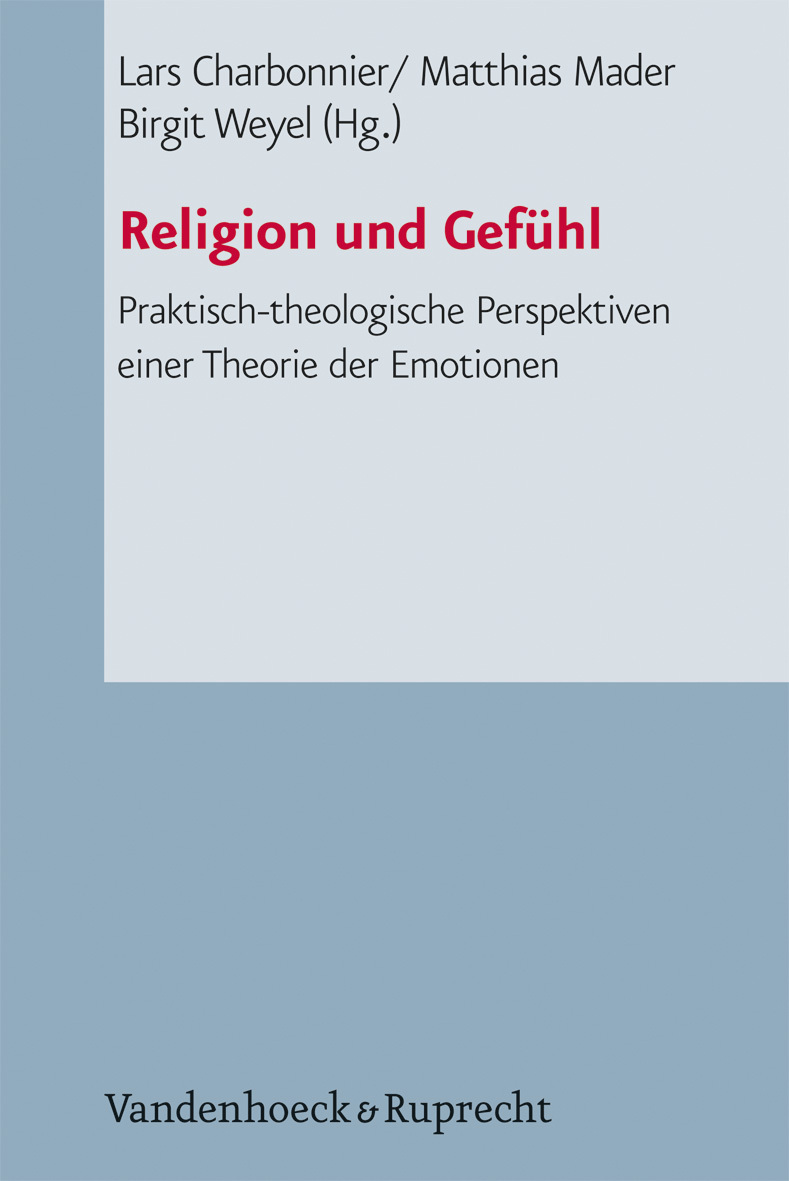
Religion und Gefühl
Praktisch-theologische Perspektiven einer Theorie der Emotionen, Arbeiten zur Pastoraltheologie, Liturgik und Hymnologie 75, Arbeiten zur Pastoraltheologie, Liturgik und Hymnologie 75
Beschreibung
Emotiotionality booms. Presently feelings and emotions play a major role in many scientific fields. The same is true for contemporary endeavours to discern and describe religious phenomena within religious studies. Theology has, however, only little to offer to an interdisciplinary theory of emotion. There are few classic theological approaches to the topic of religious feelings because past and contemporary theological reflection all too often restricts itself to cognitive concepts of religion. Religion is mostly seen as an individual's rational way of meaning-making in order to find guidelines to his or her actions. Thereby important aspects of religious practise are ignored.This book documents different empirical and non-empirical attempts to theorize emotion. It is asked whether there are any emotions and feelings that are in themselves religious? If this is the case, in what way do they differ from non-religious emotions and feelings? What is the relation between a religious idea and the emotion that is connected to it? Are ideas antecedent or do feelings come first? Which ideas work as triggers of wich particular religious affections?
Schlagzeile
Gefühle haben eine große Bedeutung für die Religion. Das wurde vielfach übersehen; Religionen wurden vor allem auf ihre Glaubensinhalte beschränkt wahrgenommen. Zwar gibt es einzelne Ansätze, das Gefühlsthema aufzugreifen, aber nach wie vor dominieren Konzepte, die die kognitive Dimension der Religion im Sinne eines individuellen reflexiven Deutungshandelns in den Mittelpunkt stellen. Der Band versucht diese Lücke zu schließen, indem er die Frage nach dem Verhältnis von Religion und Gefühl in den Mittelpunkt stellt.